eBook price movements, free eBooks, and the Eurozone crisis

There have been quite a few price movements for our books on Amazon recently. I’ll explain why and how there are likely to be more, courtesy of the slow-motion train crash that is the Eurozone Crisis.

First of all come the freebies. If I ruled the world, I would like to have a selection of our short stories and novelettes available for free all the time; our authors (by and large) agree because it give you good value, and gets the authors a chance to be read by more people. This is, in fact, exactly what happens now for readers who like to pick up their books from retailers such as Apple iTunes, the B&N Nookstore, and Smashwords.

Regrettably (for me, but perhaps not for you) I don’t rule the world (still working on that one). Sometimes, in the land of eBooks, it feels as if Amazon rules the world. They’re like a super-advanced alien species whose motives are beyond our comprehension, and to whom we are of no more note than ants. [But then, in my other existence, I’m a science fiction author and so I’m allowed a skewed view of reality.]

The upshot is that Amazon will sometimes, at their discretion, price-match free books at other retailers. And then put them at full price. Then free again. One day they might decide to withdraw our books from their stores because we’re not supposed to undercut Amazon pricing, and we’re not allowed to set books to less than 99 cents.

Just to add to the confusion, there are different Kindle stores outside of amazon.com for other countries, such as amazon.co.uk and amazon.fr (where we had a best-selling book! Merci, mes amis.) These other Kindle Stores work differently, and books will be free at some and not at others.

Over Christmas we had a rash of book returns at Amazon. These were all for Paul Melhuish’s short story, Fearworld, which was changing price every few days over at amazon.com. I was sorely disappointed because I hate to think that anyone felt let down by Greyhart Press. All I can do is urge readers to double-check the price for any eBook at any site before making your purchase. That goes for all independent publishers. I’m afraid that none of us have the power to set the retail price, only to influence it.

Just to prove the point, Amazon have been reducing the retail price of some of our books on amazon.co.uk  At first, I thought this was some January sale initiative, but it turns out it’s actually because the Grand Duchy of Luxembourg have decided to apply its 3% VAT rate to electronic books, in contravention of EU law.

Luxembourg, yesterday

Yes, that’s right. The Grand Duchy of Luxembourg. It used to be a sizeable state centuries ago, but got nibbled away by Germany and France until only a remnant is left behind. Most famously, it is where Amazon.co.uk is legally based and so sets the VAT rate for Amazon eBooks. [Second most famously in my worldview, Luxumbourg is where German troops invaded too  soon on the night of August 1st 1914, and had to apologise and go back before invading again the next day].

Okay, you may be thinking (if you’ve got this far), I sort-of get that Luxembourg sets the tax rate, but what’s that got to do with the Eurozone Crisis?

I’m glad you asked that 🙂 Personally, I think the Single European Currency is a good idea, just that the implementation was botched from the beginning. Luxembourg setting a lower VAT rate breaks European law. Probably they were encouraged to do this because France recently did exactly the same thing. It’s just one more example of how readily EU states break EU agreements, most notably the Stability and Growth Pact, which was supposed to set fiscal discipline, but which has been comprehensively disregarded, even by Germany.

The Euro Crisis will muddle along for months, maybe years before resolution. Ultimately, the Euro will never work unless there is the level of fiscal and political union necessary to support a single currency. The markets know that and patience is running out for half-assed measures. So either the Eurozone will break up, or there will be greater fiscal union. If it’s the latter than expect tax harmonization and higher tax rates all round.

So, if you purchase eBooks from amazon.co.uk, keep an eye on Angela Merkel next time you watch the news, because there’s a fair chance that before too long, she will be putting the price of your Kindle books back up again.

Welcome to the wacky world of eBook pricing!

Angela Merkel thinking about British Kindle-lovers


Posted in Thoughts | Tagged , , , | Leave a comment

New Book Launch: The First Last Robot

Click for larger image

I am delighted to announce the launch of our first young adult science fiction eBook, a short story by a new author to us, David Fraser.

When cousin Vinny calls from Callisto, he offers dropouts Jimmy and Kevin a chance to get their butts off the couch and do a little adventuring. Oh, and there’s a chance to win megabucks too. Their eyes fill with dreams of fast cars and pretty girls.

Just one problem. They have to find the last of the robots first. Then they have to kill it.

‘The First Last Robot’ is a YA science fiction short story with a wickedly sly sense of humor. In older readers David Fraser’s story will spark happy memories of early Asimov and Heinlein juveniles. In paperback this would be about 20 pages.

The book is available priced 99c from amazon.com, and 86p from amazon.co.uk Normally at a book launch, I would state that it is available at Smashwords too and coming soon to other retailers. Not this time as I have decided to enroll The First Last Robot in the Kindle Owners’ Lending Library, part of the Amazon Prime program. This might help us reach a wider audience, or it might not. It is difficult to say without trying. The regrettable corollary is that Amazon demands that books enrolled in this program must not be available elsewhere.

And, finally, welcome to David Fraser, who makes his Greyhart debut with this story. I’ll be adding an area to our website soon to introduce you to all our authors. But here is something now about David.

David Fraser, born in 1973 in Canandaigua, New York, stands six feet tall (1.83 meters for those of you who insist on using measurement systems that make sense) and has way too many college degrees.  These include (in both chronological and alphabetical order):  a Bachelor of Fine Arts from Syracuse University, a Bachelor of Science (Mathematics and Computer Science) from Emory & Henry College, and a Master of Science (Applied Mathematics) from Rochester Institute of Technology.

More importantly, he is the father to two daughters who do their best to make sure he has little time to write (it usually involves My Little Pony) (I mean the daughters are doing something involving My Little Pony; David Fraser doesn’t write about My Little Pony).

He likes cooking (he makes a mean New England Clam Chowder) and parentheses (who doesn’t?).

Posted in New Author, New e-Book | Tagged , , , , | Leave a comment

Free books! It must be Christmas at Greyhart Press

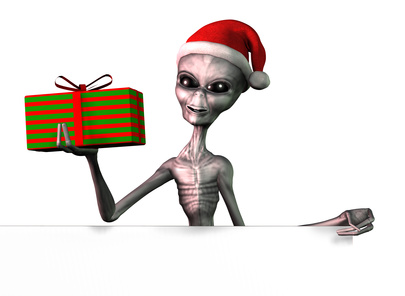
I give you gifts from Greyhart Press. Ho ho ho, Earthlets!

The wonders of retailer matching means that some of our book have just become free at amazon.com, including several that had previously been free, went up to full price, and are now free again. Some of this is our doing; some not. I think Santa Claus must have a hand in it. Look, there he is, now…

Here are the new ones, with links to the amazon.com pages. Please check the book is free before purchase. Amazon can and will change the price without notice.

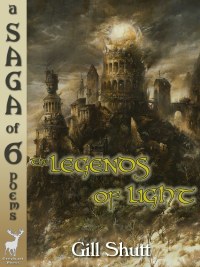
The Quest for Elena the Fair

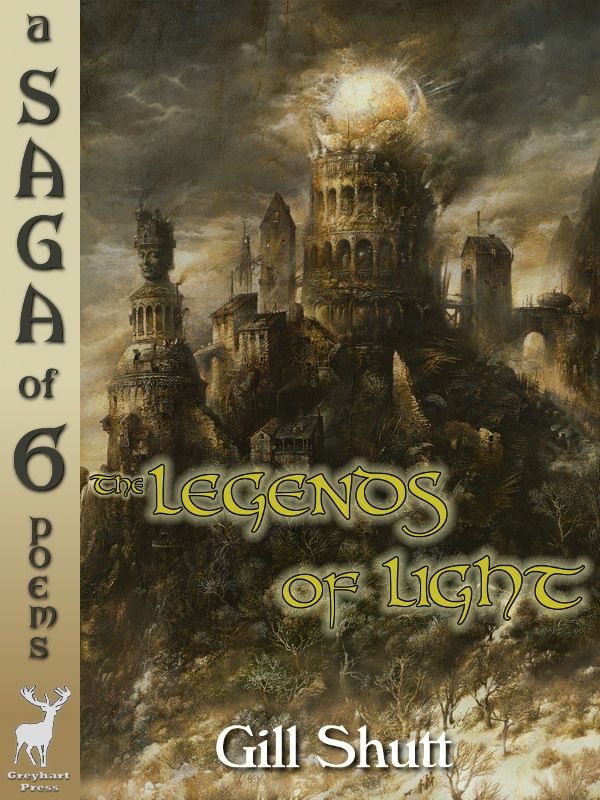
This is the first of the six-part YA poetry saga The Legends of Light, which was recently reviewed by SF Site who said: “… any fan of fantasy… should love it.”

See our webpage on this book for more retailer links. As of ten minutes ago, they were all free except for amazon.co.uk

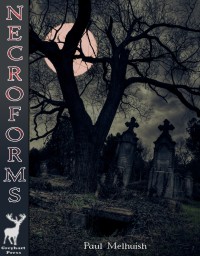
Necroforms

This is an adult ghost story, very English in its style and setting.

See our Necroforms web page for more retailers links. Most of them are free except for amazon.co.uk

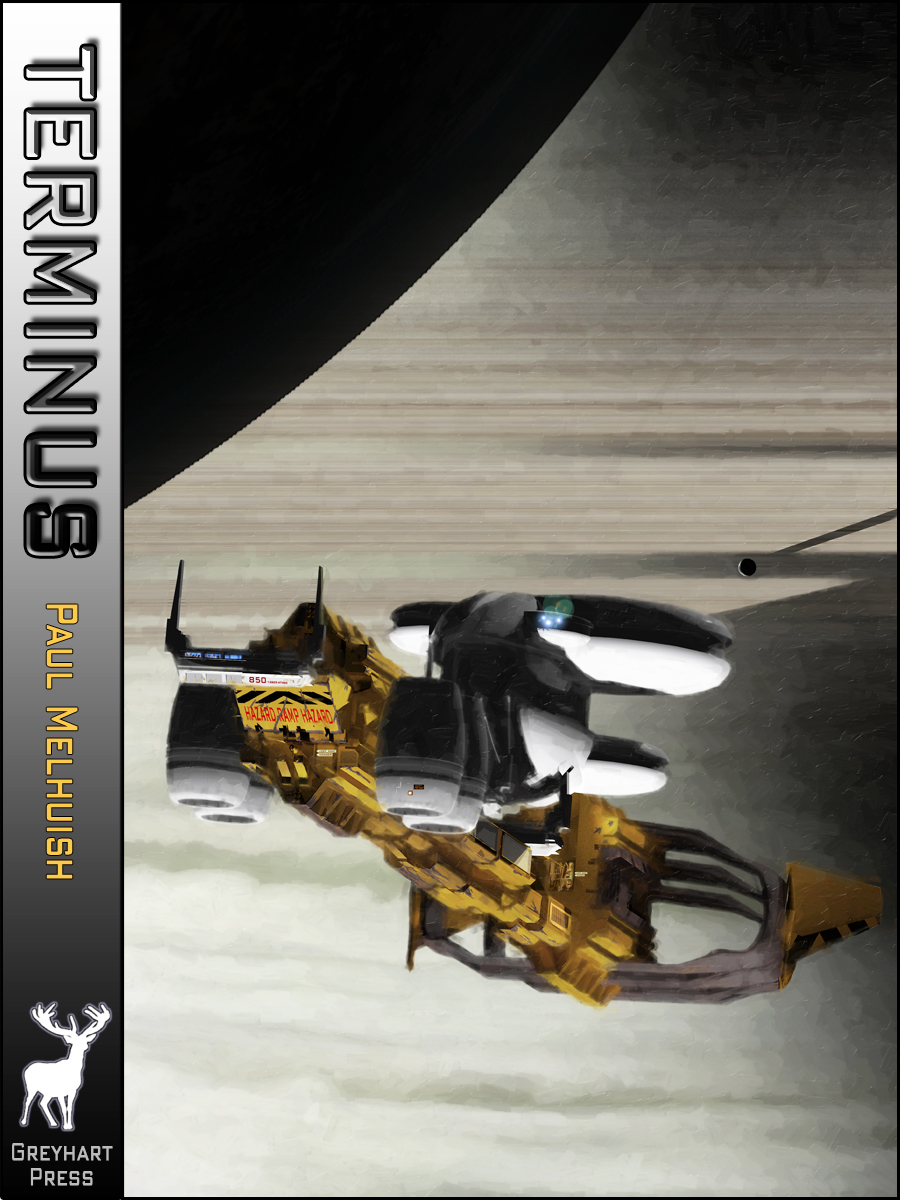
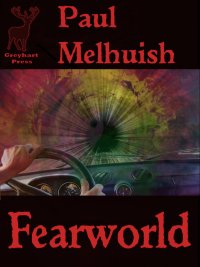
FearworldNecroforms author Paul Melhuish also has his debut space horror novel, Terminus, on special offer at 99cents / 86p and his apocalyptic horror short story Fearworld free (again) at amazon.co.uk and elsewhere.

Click on any thumbnail for larger images

Some of my own science fiction short stories are also free.

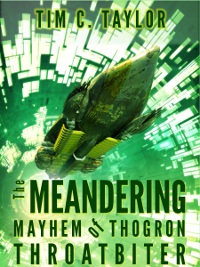
The Meandering Mayhem of Thogron Throatbiter is free at amazon.com and amazon.co.uk, as well as other retailers. This is a toungue-in-cheek story of an alien barbarian fleet that scatters everything before it across the galaxy.

Future Speculation is an energetic short story that tells the origin of the next stockmarket collapse. Lots of running around and shooting in this one. It’s free again at amazon.com and elsewhere.

That’s all our free books on amazon.com We have other books free at other retailers, For example, Garrison is a hard-edged novelette by Nigel Edwards that peels back the formal veneer of the army and sees inside how it really works. Our ex-RAF author isn’t writing about a modern army, but a fantasy one with hideous spider-mounted cavalry. The insights, though, are universal. Garrison is free at amazon.co.uk and other retailers.

If you review one of our free books in a review site such as amazon.com or goodreads, you can get your next book free. See our READ! REVIEW! REPEAT! promotion page for more details.

Read! Review! Repeat!

Santa image © AlienCat – Fotolia.com
Posted in Promotions | Tagged , , , , , | Leave a comment

Guest Post: Kristy Tate on ‘Why I Like To Write’

Elizabeth George once said that she writes to stay sane. I do that, too. I also do it to keep everyone around me sane.

Writing keeps me from obsessing.

Here’s me when I’m not writing: Carol drops by with a pan of brownies. She looks like a teenager in that halter top. She says, “I brought these for your husband to thank him for helping me fix that broken window.” I say thank you, but inside I’m thinking I really wish she’d wear more clothes. I wonder what she was wearing when Larry was at her house, for how long was that? I can’t compare myself to her—I had six kids and she has a dog. Maybe my abs would look like that if I had countless hours to spend at the gym. Does she work out at the same gym as Larry? Why does she call him all the time? He doesn’t even like brownies. But, I love them. I bet she knows that. She knows that I’m going to eat this entire pan of brownies because now I’m so depressed and one or two or five brownies isn’t going to matter because I’m going to be divorced and single and fat. I better call Larry, although I just talked to him and he’ll be home for lunch in twenty minutes, I need to hear his voice.

 Here’s me when I’m writing: The doorbell rings but I don’t hear it because I’m deep into my story. Somehow Mercy has to stop Eloise from going on a drive with horrid Mr. Steele. What can she do—should she confide in Eloise? In the real world, my dog is pawing at me. No. Eloise is a blabber mouth. She can’t be trusted. My dog knows someone has come to the door and she pulls at my sock with her teeth. I shake her off, but she’s so annoying that I have to investigate. Someone has left brownies on my front porch with a thank you note. It’s from Carol, that darling girl from across the street. I consider the brownies and inspiration hits—Mercy will bake Eloise a pie laced with a draught that will make her sleep through her rendezvous with Steele. I put the brownies on the counter and save them for when Larry comes home for lunch. I hurry back to Mercy, Eloise and Mr. Steele, wondering how to make a sleeping draught.

(FYI- Neighbor Carol is fictional, used to make a point about my own lunacy and not a commentary on my highly respectable, modestly clothed and admirable neighbors or my good husband who always lets me eat more than my fair share of brownies.)

Writing gives me someplace to put my head.

As a mom, I do a lot of mindless things—driving, stirring, ironing, cleaning toilets—and while I’m doing these mindless tasks, it’s nice to have something to think about (other than my neighbor’s halter top.) I also love research. It’s like a treasure hunt that just keeps going. The internet is an endless source of information and if I can’t find what I need there, I try to think of people who might know and I call and ask them. No one has ever been annoyed. People love to believe that they’re experts and when I call with a question, they’re always happy to chat.

Writing gives me hope.

Remember how I said that as a mom I do a lot of mindless things? I don’t really enjoy most of them. I do them because they have to be done, but I’d really rather not iron, clean toilets and mop floors. I’d like to pay someone else to do those things, but since my husband makes several dollars an hour and I make pennies, I can’t pay someone to do those mindless chores that must be done. It wouldn’t be fair. I’ve promised myself that when I’m making several dollars an hour that I’ll hire a chore person. I hope to someday make enough with my writing to justify that expense.

Writing gives me places to go.

Remember how I said I love research? This summer I spent a day in Seattle visiting all the places that Laine and Ian would go. I walked through the neighborhood on Queen Anne Hill and took pictures of the turn of the century mansions. I stopped at Kerry Park and watched the boats in the harbor. And then I went to the University of Washington’s library, because that’s what Laine does in chapter four. I imagined her running down the steps and bumping into the girl with the smoothie. It’s like spending the day with very good friends.

Writing gives me insight.

I like to think I’m sensitive and intuitive to those around me, but when it comes to my own psyche, I’m clueless. The youngest child of six born late in my parent’s life, I grew up in a house full of teenagers and adults. If I ever lost my temper, I was subjected to ridicule. (Angry or not, I was almost always subjected to ridicule, but that’s a different post.) I learned to shut down my emotions and I’m pretty good at masking and avoiding them. Writing brings them to the forefront. I’ll unconsciously do things like name annoying characters after annoying people. I’ll usually catch the real life and fictional connections on the rewrite and make the necessary changes, because I’m sensitive enough to know it’s unkind and unwise to hurt even annoying people’s feelings.

And that’s probably much more than anyone wanted to know about my psyche and why I like to write.

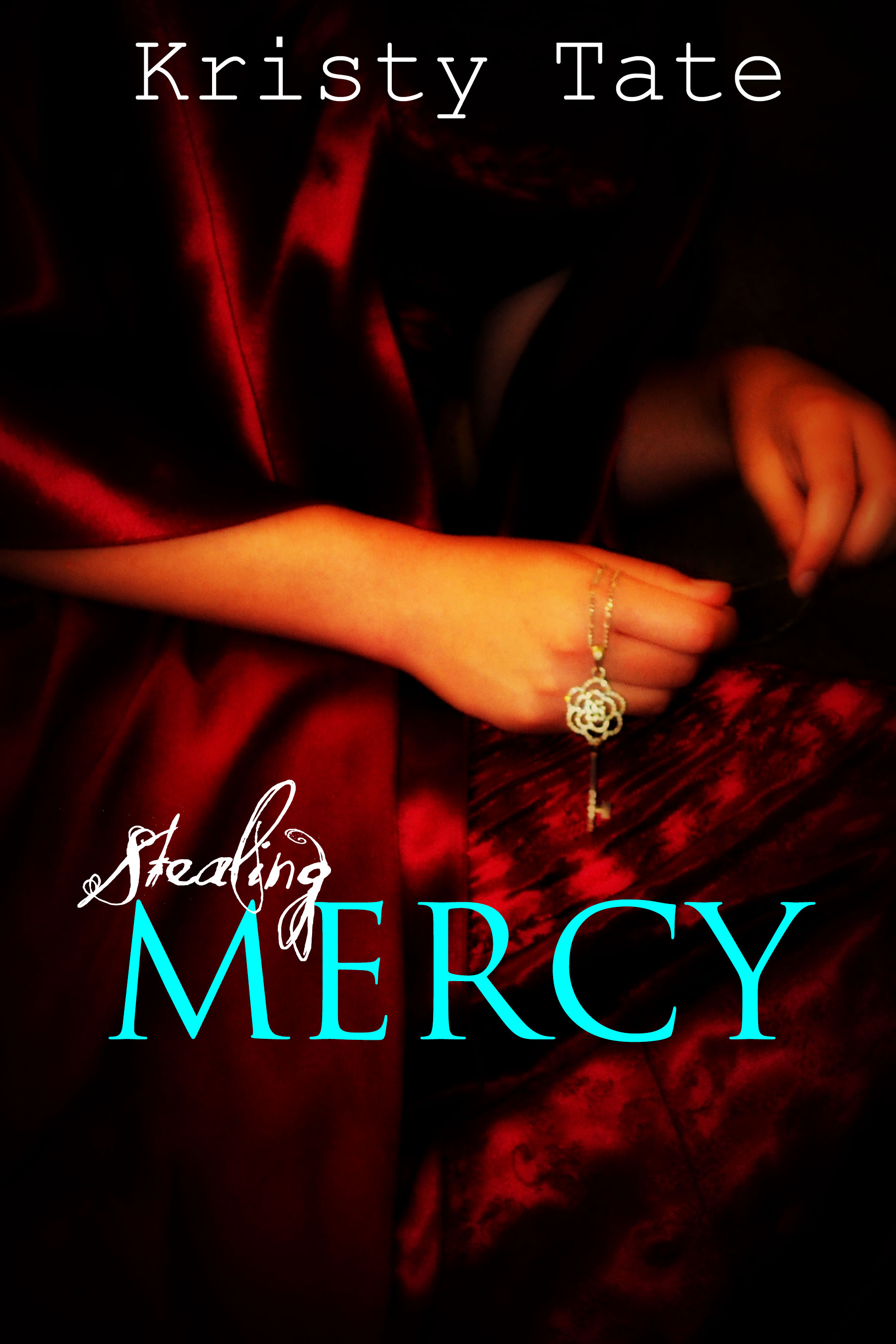
Stealing Mercy, a historical romance set against the Great Seattle Fire of 1889, is available in paperback and eBook editions from a range of online retailers, including amazon.com | amazon.co.uk | Smashwords

Read more about Kristy Tate at her blog http://kristystories.blogspot.com/

Click to read our guest posts

Posted in Guest Post | Tagged , , , | 5 Comments

The world loves Gill Shutt today

Some nice things said online in the past 24 hours about Gill Shutt, author of The Legends of Light.

SF Book Reviews reviewed The Legends of Light. The reviewer started off not keen to be reviewing poetry, but Gill’s writing soon won him round.

A review popped up on amazon.com that likened The Legends of Light to Tolkien, and described Gill’s writing as ‘very much in Tolkien’s class’. That’s a compliment I’d agree with. When I first read the manuscript, it put me in mind of The Silmarillion.

Online Finnish/ English  bilingual magazine, HESA, paid Gill the ultimate compliment by publishing her work, a steampunk poem called The Ticket Vendor.


Posted in Uncategorized | Tagged , , , , , | Leave a comment

Guest Post: Ian Miller gives a scientist’s view of science fiction

Scientist and author, Ian Miller, explains why the science in much science fiction is not weird enough, and how his science fiction became published scientific papers.

I have always had an interest in science fiction, but since I am a scientist, I have also noticed that only too much of the science fiction really makes very little scientific sense. Don’t get me wrong; I have no objection to weird life forms and strange physics, but only too often, in my opinion, the “weird” is either something reasonably ordinary all dressed up, or alternatively, it seems to get the author out of a difficulty of his own making. Oddly enough, most of the strange physics is to avoid the real problems of space travel, and to make everything “more ordinary”.

Yet some real physics are ignored where it could provide real moral problems. As an example of what I mean, one of the great triumphs of twentieth century science is relativity, and relativity has some really odd situations, yet these are largely ignored. Consider a great plot excuse: “They started it!” Now, consider that it is possible to construct scenarios involving relativity when two observers can truthfully state that they saw two given events in the opposite order! Now who started what? What are they going to feel when their retribution is shown to be totally unjustified by further unbiased observers in different frames of reference?

What is science fiction? Obviously it depends on your definition, but I would argue that the original fiction fitted the definition. The oldest story I know of, The Epic of Gilgamesh, is about power and a search for immortality. The Odyssey, besides the blood-thirsty ending, is about man’s relationship with the Gods. What we find is that these are great stories in which the hero has to battle mind-blowing problems that test their personal failings, but also the stories lead the reader to consider some of the great problems people of the time faced (and to some extent, still do.)

One of the greatest assets to a science fiction writer is actually something that almost contradicts the thinking behind much modern physics: time symmetry. In physics, one interval of time is equal to any other equal interval in its physical effects, and it is from this that we get the law of conservation of energy. In human activity, there is no such symmetry, and humanity’s problems in one century are different from those in another. Oddly enough, writing courses, etc., invariably ignore this advantage, and writers are implored “to consider the human condition”. The advantage for writers is that time asymmetry gives us a continual supply of fresh material, so why not take advantage?

That, at least, is my excuse! In the course of my life in science, I have had intermittent bouts of research on biofuels; the work was intermittent because so was the source of funding. While it seldom makes it to public awareness, we are also running out of easily available resources. When you move your iPad screen with your finger, does it occur to you that in only a few years such devices have consumed about half of the world’s supply of easily recoverable indium? For me, this was the stuff for my first thriller.

My questions are, what happens when oil and resource availability fails to match our desires? What happens to debt-ridden governments as economies go into reverse? More to the point, how do we avoid the worst of such situations? I do not have answers, but I am convinced that our best chances of avoiding the worst outcomes come when we start thinking about them and doing something about them now. In any case, is this not material for fiction?

I am writing a series of futuristic novels that start as thrillers (one self-published), and as we get further to the future, become more science fiction, with backgrounds that look at futures that we might wish to avoid. But I also want to try to make the stories fit with plausible science, and in one that is yet to be published, the plot depends on relativity.

Trying to be realistic does not mean you have to be limited to what we know now. One reason why my earlier novels remain unpublished is that I got side-tracked. When I offered an aside explanation for an advanced propulsion system, I realized therein lay a new model for nuclear structure, which, two years later, became a published paper. Similarly, in another as yet unpublished novel I had to come up with an “unforeseeable discovery” on Mars. What I came up with became the basis of a different theory of planetary formation, which will be self-published in an eBook.

Detailed science must not appear in novels; all that is needed to show how science works is an indication that there are rules. My approach is to give a very brief explanation of something, then later show how this leads to something else that is not obvious. What I hope is that when the reader has finished, they will think they have read a thrilling book, but in the subconscious there will be something extra to think about, and an indication of how to go about that thinking.

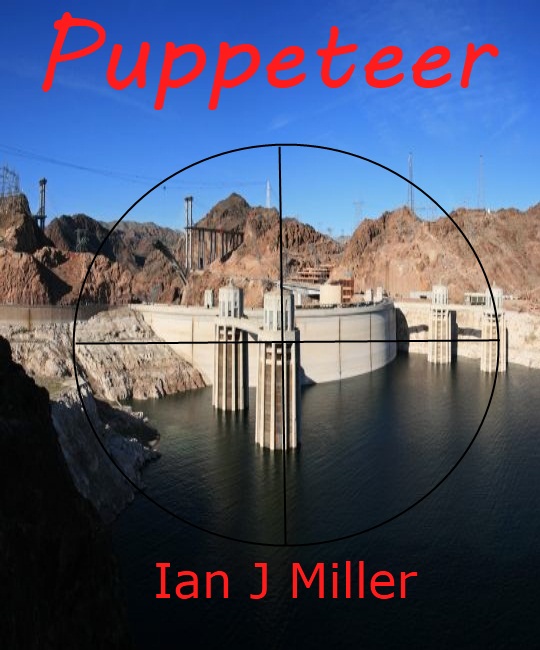
Ian Miller is an independent (i.e. he owns his own laboratory) semi-retired research chemist who lives in Lower Hutt, New Zealand. He has been writing science fiction for a number of years, and has finally elected to commence self-publishing it. The first of a series of futuristic SF/thrillers, Puppeteer, is now available as an eBook from amazon.com | amazon.co.uk | Smashwords (which caters for all major eReaders)

Details of both his activities, and his book on how to form a scientific theory, together with links, including to a scientific blog, are at http://www.ianmiller.co.nz.

Posted in Guest Post | Tagged , , , , | 6 Comments

Greyhart Press invites guest posters

Got something you’d like to share with our site visitors?

Want to drive more traffic to your site?

The submit a guest post to us. Full details here.

Posted in Guest Post | Tagged , , , | 2 Comments

We’re #1 in the Amazon best-seller charts…

… in France! In English-language short stories. Don’t ask me why. I think we were there a little while ago too.

Congrats to our author Nigel Edwards anyway 🙂

Posted in Uncategorized | Tagged , , , | 2 Comments

20-Count robots role-play Andy Bigwood for an outrageous 99cents

The title of this post is a mash-up of what’s been happening with Greyhart Press over the past couple of days. Once you’ve heard our news, it might just make sense.

A draft cover

I’ll be sending edited manuscripts back today to two new authors for Greyhart Press. Hopefully one or both will be published by Christmas.

I’ve previously mentioned David Fraser and his YA science fiction short story: The First Last Robot. This is now nearing completion.

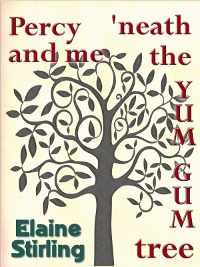
I am delighted to also welcome Elaine Stirling and her 2,700 word poetic narrative: The Mexican Saga: A Journey Through the 20-Count.

Elaine is the author of many novels and has been published in such magazines as Alfred Hitchcock Mystery Magazine and Fantasy and Science Fiction. Elaine describes her forthcoming eBook thus:

Possible artwork. Click for a much bigger version

“Readers of Carlos Castaneda will recognize the themes immediately. Those who haven’t will still enjoy the experiential, non-narcotic rush of a 4-year-old initiate who grows to become a full-fledged Nagual (Toltec energy master). The facts of the 20-count, a pre-Maya system of cognition, I have researched assiduously for more than…well, 20 years.  ;-)”

Elsewhere, I was interviewed about Andy Bigwood and cover art over at author Chery Shireman’s website, and Greyhart Press got a mention at the excellent RolePages.Com , a collaborative role playing and artistic creation community.

science fiction is not just for Christmas

And, finally, to promote international access to scary science fiction stories at Christmas, Paul Melhuish’s debut novel, Terminus, is discounted to 99c/ 86p The book is already available for this discounted price at amazon and Smashwords, but will take a short while for the change to replicate through to all retailers.

Posted in New Author, New e-Book | Tagged , | 1 Comment

Our changing covers
click for a larger image

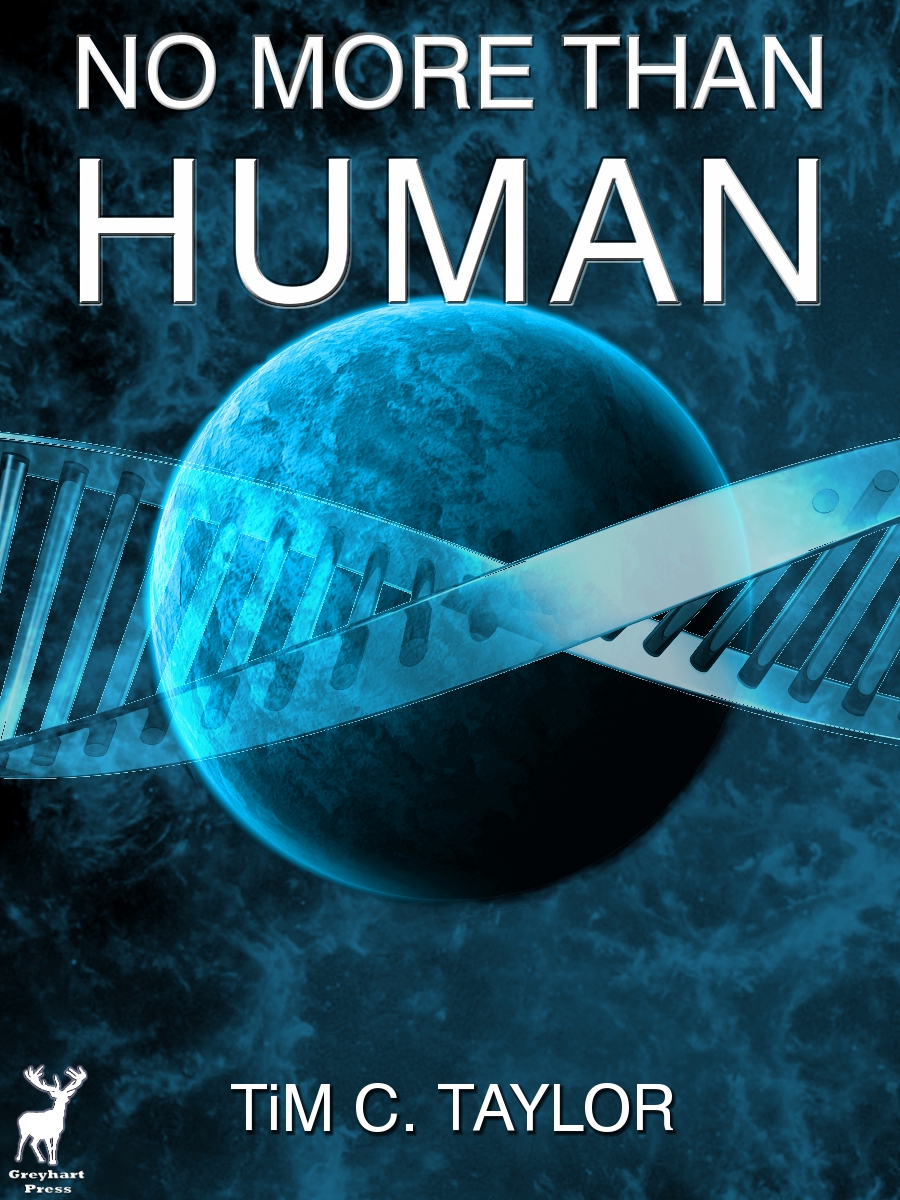
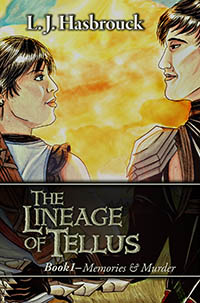
There’s been another change to cover art today, No More than Human gained a new cover. I think it’s tidier, possibly less original but definitely smarter.

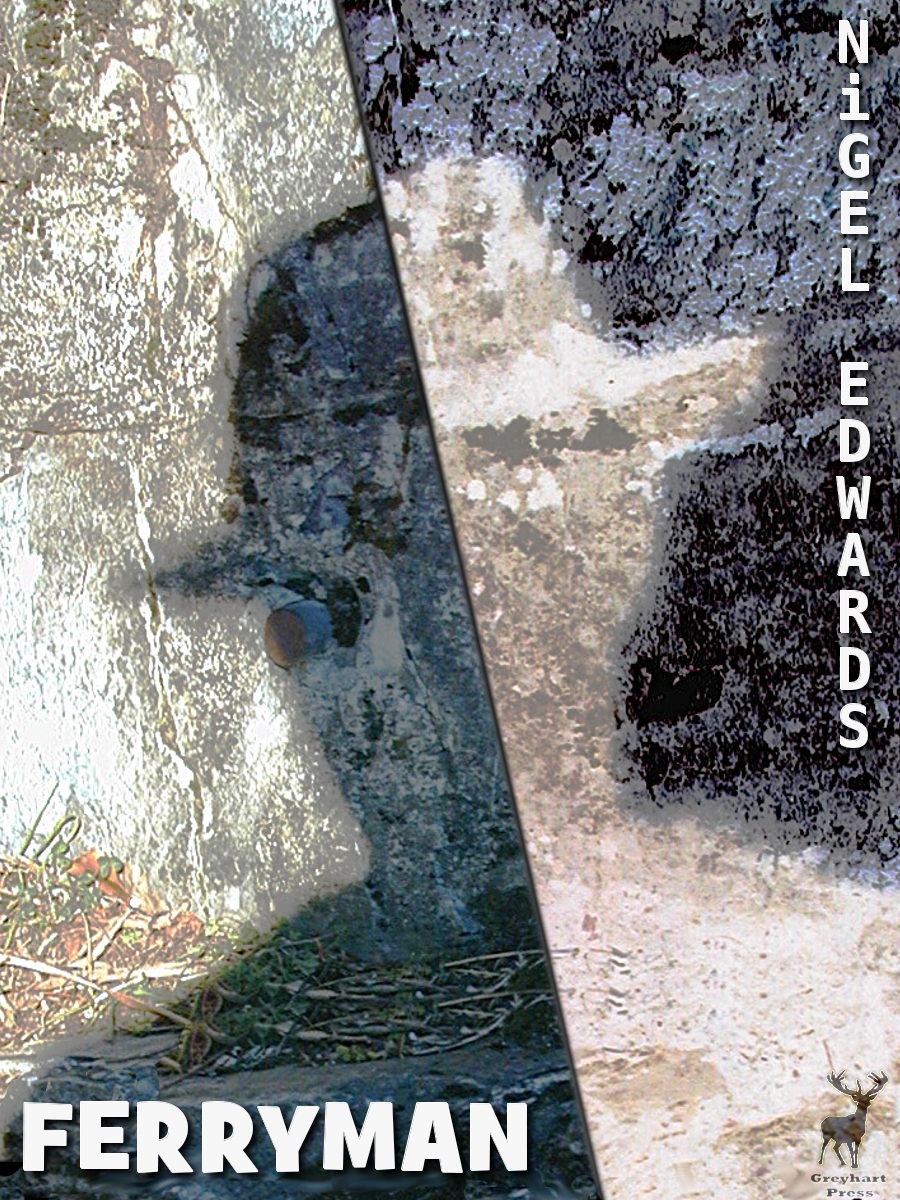
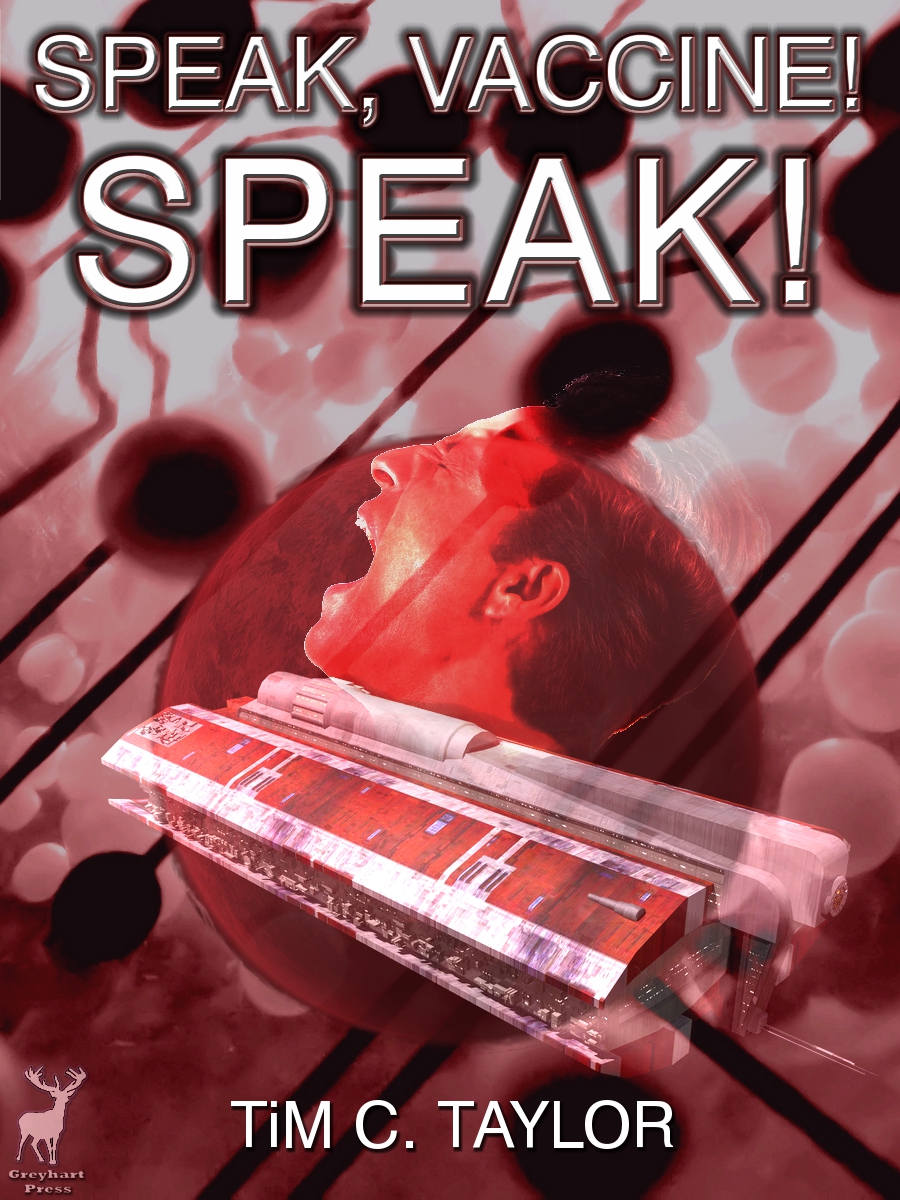
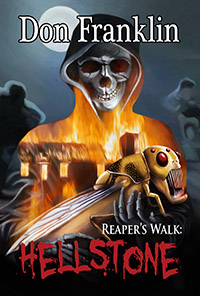
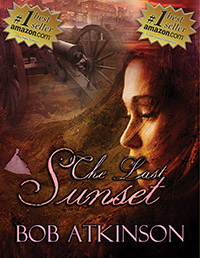
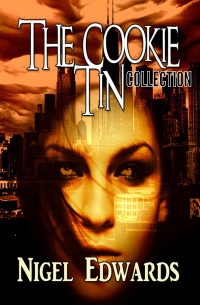
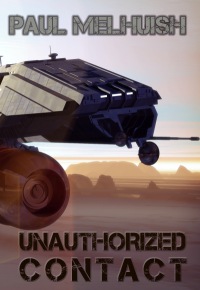
When we started, we had a common look of bright colour banding top and bottom, text in Weathered font, and our Greyhart Press logo top-left. What I’m trying to do now is free our covers from that constraint but also to let you know at a glance whether the book is a short story or not. Novellas and novels have the Greyhart band on the left, short stories don’t.
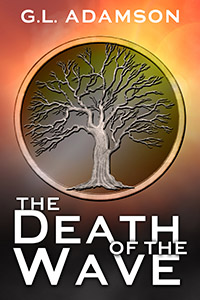
We’re still experimenting. Perhaps we’ll decide that’s too complicated. Let us know what you think…

An example of a novel cover

One thing I am sure about. When I first looked at self-published short stories available for the Kindle back in March, the standard of quality for covers and internal formatting was much lower than it is now. Many authors made absolutely no attempt at a professional cover. Several authors used a picture taken from a web cam and stretched it to fit the cover page! I myself bought several short stories (which to be fair I enjoyed reading) that didn’t have a cover at all. Things have moved on rapidly.
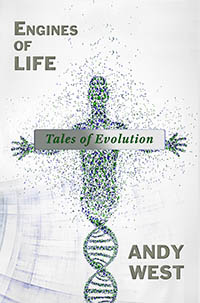
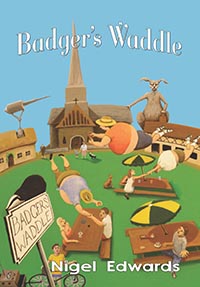
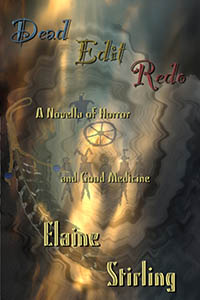
The internal formatting is better now. In fact, if you are a part of the eBook reader or writer communities you would know that most formatting groans these days are aimed at the major publishers, specifically when they do an OCR scan of a print book and rush out an eBook without copy-editing. The amateurs are often more professional than the professionals right now!

Of course, this is a moment in time, just as the period of the web cam covers. The eBook world in six months time will be different again. Greyhart Press will be a part of that future, and I hope you will journey there with us.

Tim

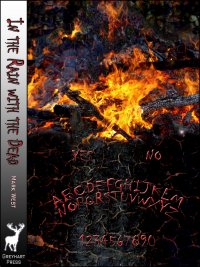
Here are some more covers and internal illustrations we’ve put together in the past few weeks (click to bring up a much larger version)


Posted in Announcements | Tagged , , , | Leave a comment