Get ready for the Mayan Apocalypse

A (real) Mayan calendar

December 21st 2012, the end of the Mayan Calendar.

I’m getting excited about the run-up to this big date. An awful lot of nonsense is getting spouted about it, of course, but that’s all part of the fun.

I was reminded about the Mayan calendar when I came across this blog post today from Red Hunt Travel, a travel writer  who’s seen real Mayan ruins. Check out the post for a couple of great pictures and interesting info.

Over at 11points.com is a fun set of facts and speculation about the 2012 Mayan Calendar event.

Of course, there are whole websites devoted entirely to the event, such as 2012apocalypse.net  which mines a variety of texts in search of some kind of prediction of apocalypse.

www.2012endofdays.org covers some of the same ground, and has more adverts, but is well worth a look for the gorgeous travel photographs.

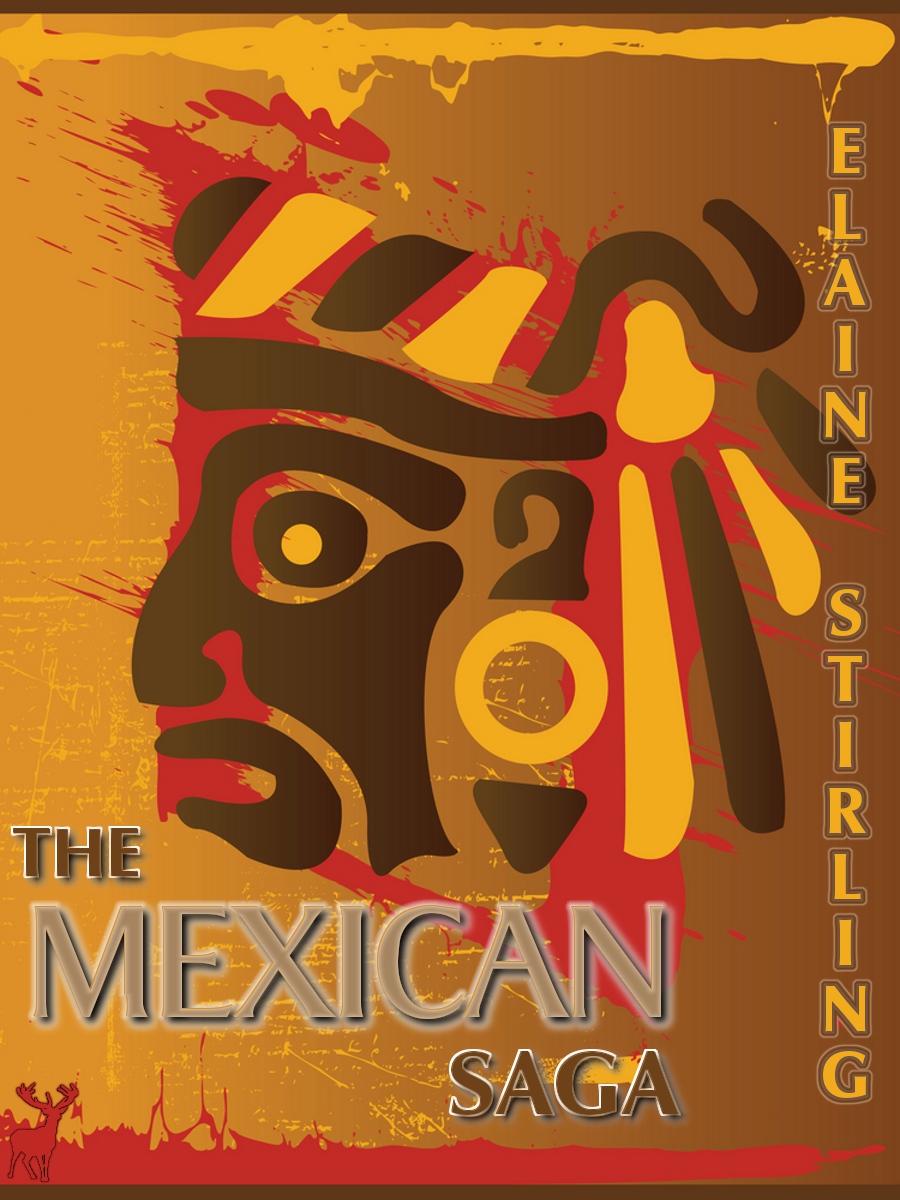
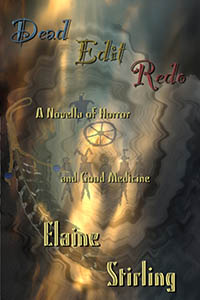
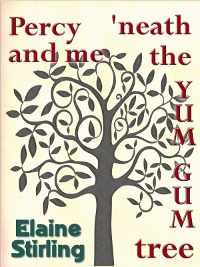
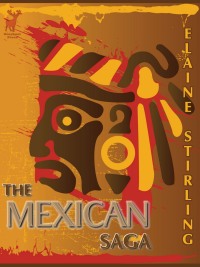
Someone who knows a lot about this subject is Canadian author Elaine Stirling who wrote a short story in verse about the Mayan Apocalypse, where you get to experience what it will really be like from the inside. I liked the story so much I published it as an eBook. If you are interested in the apocalypse then take a look at Elaine’s book. It’s called The Mexican Saga: a poetic journey through the 20-count, priced at a bargain 77p in the UK and 99cents everywhere else. Book blog, The Alternative had this to say about Elaine’s book: “Stirling has created an inspiring epic in less than fifty pages.” — The Alternative

Posted in Uncategorized | Tagged , , , , , , , | 1 Comment

Our author Gill Shutt has been awarded turtles

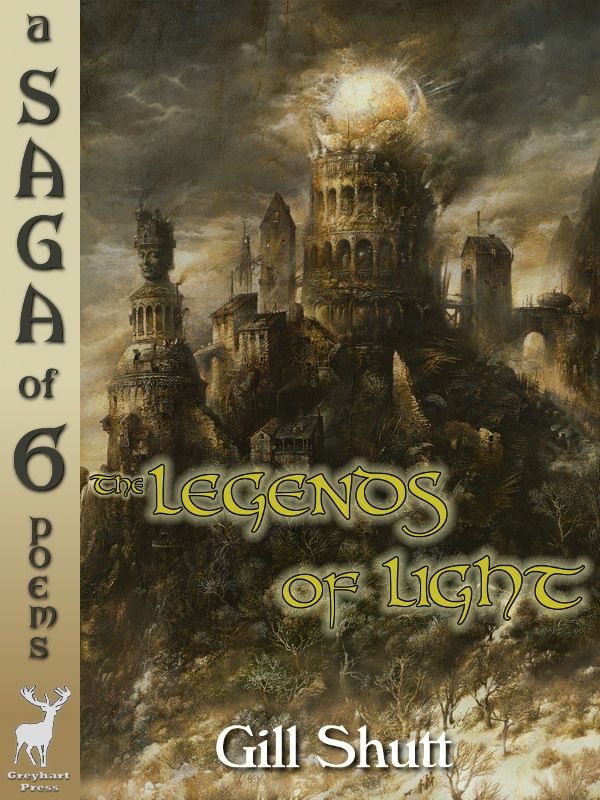
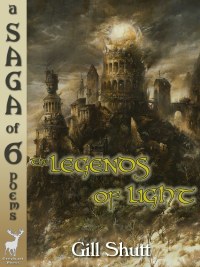
Gill with her YA saga-told-in-verse has picked up another great review, this time at YA book blog: Howling Turtle where The Legends of Light was awarded four turtles.

If I was awarded turtles, I would have no idea what to do with them. Gill says she might find some space next to the snake, or perhaps the Giant African Land Snails.

Well done, Gill. Read the review here.

Posted in Uncategorized | Tagged , , , , , | Leave a comment

eBooks: are we in a bubble?

eBooks price debate

I'm right! You're wrong!

This morning, I read an article in the Guardian (a newspaper here in the UK) that’s provoking plenty of argument. It asserts that the growth in publication of eBooks is a bubble and will inevitably burst.

I didn’t agree entirely, as you might expect. I chipped in my comment here. Why don’t you join the debate?

Tim C. Taylor — Publisher

Posted in Thoughts | Tagged , , , , | Leave a comment

Get ‘The First Last Robot’ for free on Amazon: Feb 4th

On Saturday, Feb 4th, our YA short story: The First Last Robot will be free from amazon.com and amazon.co.uk

This promotion lasts for one day only. Don’t miss out!

Posted in Promotions | Tagged , , , , , , | Leave a comment

The Reality War. First novel launched: February 9th

Book1: The Slough of Despond

In 1992, Radlan Saravanan runs a small business out of a Tudor cottage in the sleepy English village of Elstow. But Radlan was born in 2951, and when he falls in love with a local girl, he has to choose between running from his own people and condemning his lover to die.

He makes the wrong choice.

Travelling into the past, falling in love… it turns out that he was meant to do these things. He’s been manipulated all along. But now he’s slipped his handlers, and Time isn’t following the right script any more. Other versions of history vie for dominance, and our reality is losing. Did the dinosaurs really die out? As the human reality becomes ever less probable, it’s increasingly likely that dinosaurs are still very much alive.

In 1992, Radlan Saravanan sparked The Reality War.

Book2: The City of Destruction

The Reality War is a two-novel series inspired by The Pilgrim’s Progress, an allegorical novel by 17th century author John Bunyan. It is both an action-adventure series, and a spiritual journey made by two people, mirror images of each other from rival realities.

The Reality War Book1: The Slough of Despond will be published as a Kindle eBook on February 9th, 2012, to be followed by paperback and ePUB editions.

The Reality War Book2: The City of Destruction will be published Spring 2012

For more details, see the dedicated Reality War page

Posted in New e-Book | Tagged , , , , , , | 2 Comments

Greyhart Press now flying with Kobo

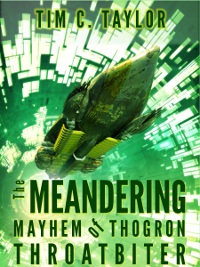
We’re pleased to announce at long last that we are now widely available at the Kobo Store. You can see our Kobo range by clicking on this link. All our books are available other than The First Last Robot, which is currently only available at the Kindle Store. Where we’ve set recommended price to be free, Kobo have respected that. So you can get these free books: Quest for Elena the Fair, Necroforms, Garrison, and The Meandering Mayhem of Thogron Throatbiter.

Canadian and Australian readers will probably already know about Kobo as the devices are well established there. UK readers will have seen the Kobo appear shortly before Christmas at WH Smith and ASDA. So if you got a Kobo for Chrimbo, now you know where to go to find some quality horror, science fiction, and fantasy 🙂 Also, the UK Kobo prices are slightly less than Amazon’s, possibly because they are not charging VAT.

By the way, Kobo books can also be read on Macs, PCs, iPhones, iPads, Blackberry, and Kobo is the #1 eReading app for Android.


Posted in Uncategorized | Tagged , , , , | Leave a comment

Congrats to Emma Coleman for her next publication

Dark Currents cover artwork

Our author Emma Coleman (well she wrote a cracking story for us) is part of the forthcoming anthology Dark Currents, from NewCon Press, alongside some top-notch and, indeed, award-winning authors. Well done, Emma.

The anthology is out this Easter (launched at Eastercon), and you can find out more here.


Posted in Uncategorized | Tagged , , | Leave a comment

Guest Post: Why I Want a WABAC Machine by Deborah Heal

When you have a birthday coming up you probably start dropping hints about the latest techno-gadgets you’d like to have. As for me, I’m hoping for a WABAC Machine. I’ve always wanted one. It comes from growing up in an old house, in an old village, both steeped in history.

I grew up in Woodburn, Illinois, a town—an unincorporated village, actually—so tiny it only had one store, where you could get bread, bologna, bacon, cokes, cookies, and gasoline. Woodburn may have been boring compared to the city we had left behind, but we lived in a cool vintage brick house. I loved that old house for its character or as I like to say, its “soul.”

And some of that soul seemed to be embodied in The Brick, which we discovered when we moved into the house. 1874, the date the house was built, was engraved on it. I used to run my fingers over that date, wishing I could be transported for a visit to that time so long before.

Later, I discovered another treasure in the neighboring town’s library: The History of Macoupin County.  From it, I was amazed to learn that Woodburn hadn’t always been so small. Once it had been a thriving little town with numerous stores, including the one owned by Mr. Welch, the builder of our house, which had stood where the petunias grew in our front yard. I learned that the brick for our house had been made in a brick works right there in Woodburn. That where our pasture was there once had been a livery stable and blacksmith shop. That down the street from us once stood an inn that served as a stagecoach stop. That Abraham Lincoln used to travel through our town and sleep in the inn and some of the houses too. I used to tell the kids at school that he slept in my house. How I wish that were true. But since the house was built in 1874 that wasn’t likely unless he had managed to be reincarnated and decided to come back for a visit to Woodburn for old time’s sake.

My brothers and sister and I were thrilled the summer we discovered Mr. Stevenson had an actual stage coach stored in his old barn. We may have trespassed just a bit to sneak in and explore this wondrous relic from the past.

I loved imagining the bustling little town. Late at night I could almost hear the sounds of horses and wagons clomping down the street, the stage coach rushing by, the blacksmith clanking out horseshoes. I could read the history books, and I could imagine those earlier days. But I always yearned to know more.

So when the cartoon Sherman and Mr. Peabody was first televised on our black and white TV set, I loved it immediately because they had a time machine called The WABAC Machine. In each episode, Sherman and Mr. Peaboy got to go back to visit different places and eras. Of course their take on history was always humorously skewed. I laughed at their antics, but inside, I really wished I had a WABAC Machine of my own.

All that history seeped into my bones as I grew up in that old house there in Woodburn. It’s no wonder when I began to write historical fiction that it all came spilling out. And though I never have been able to acquire the means for time travel myself, I am a generous creator and allow my characters to go back to discover what the olden days were really like.

Deborah Heal is the author of Time and Again: Charlotte of Miles Station, an historical novel for young adults. You may read more about the book at http://www.deborahheal.com, where Deborah hosts Write Brain Activity, her blog for “bookies” and aspiring authors.


Click on the button to see all our guest posts


Posted in Guest Post | Tagged , , , , | Leave a comment

Draft artwork for forthcoming novels

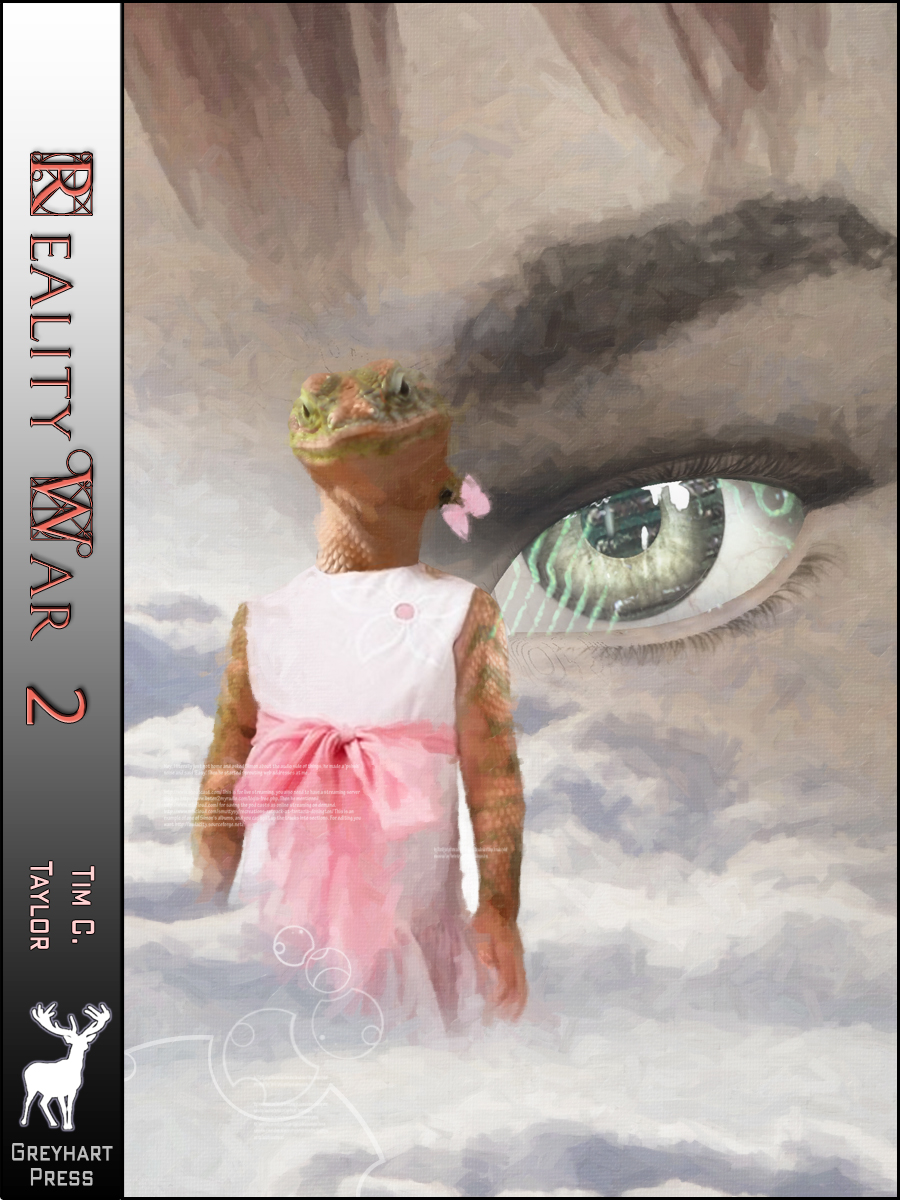
Not quiet finished. These are for a pair of novels called The Reality War. Part time-travel adventure, partly a re-imagining of John Bunyan’s The Pilgrim’s Progress, they will both be published in the first half of 2012. The artwork is by Andy Bigwood, twice winner of the BSFA Award for best artwork, and the artist behind several Greyhart covers.

Click on the image for a larger version.

Posted in New e-Book | Tagged , , , | Leave a comment

Guest Post: Ghostly Stories by James Everington

If you visit your local bookstore, or browse online, and look at the titles in the horror/paranormal section, what do you see?

  • Vampires.
  • Zombies.
  • Vampires.
  • Werewolves.
  • Vampires.
  • Cthulhu.
  • Zombies.
  • Vampires.

All well and good, but the current vogue for such fleshy, corporeal monsters leaves readers and writers in want of what is, for me, the mother lode of supernatural fiction: the ghost story. The term was a virtual synonym for horror stories once, when MR James and Co. were scaring each other around coal fires of a Christmas. Never mind that not all James’s stories actually featured ghosts – maybe ghostly stories would be a better description.

What I mean by ‘ghostly’ is a certain level of ambiguity about the proceedings, a doubt on the part of the reader about what is or isn’t objectively true at the level of the story. There’s an obvious example here, but obvious due in part to its greatness, so I’ll just say it: The Turn Of The Screw by Henry James. (The name ‘James’ obviously being a sign of a great ghost story writer, heh heh). Hundreds of thousands of words have probably been written arguing that the ghosts in the book are a product of the governess’s imagination, and hundreds of thousands probably written arguing for the opposite point that the ghosts are real.

All of them miss the point. A novel like The Turn Of The Screw (and most novels, to an extent) can be compared to one of those pictures that looks like an old woman or a young woman depending on how you look at it:

Arguing about whether this image is really a picture of an old or young woman is besides the point, despite the evidence that can be mustered either way. The whole point is that it as an image of both, and the whole point of The Turn Of The Screw is that the uncertainty about what is real is what creates the doubt, creates the unease. I think that, as a species, we instinctively want to determine whether something we hear or read is true or not, and we try and do this to fiction too. Even though we know it’s all untrue we want to know what is real in the context of the story. And I believe the failure to do so disturbs us at some fundamental, subconscious level. Which is perhaps why some critics are so vehement that, no, the ghosts the governess sees are real, or aren’t (it is a picture of an old woman, and I have a hundred thousand words of proof!)

I think this ambiguity about what is literally real in the context of the story runs through much great horror fiction, possibly without the authors always being aware of its presence. I’d bet that out of any genre horror fiction has the greatest percentage of unreliable narrators – the mad, the delusional, the dead. Lovecraft’s twisted geometries and vagaries of description work in the same way, I think – the reader finds it hard to visualise what is actually being described, which creates its own ambiguity. Shirley Jackson, in stories like The Visit and The Summer People, was a genius and knowing what to miss out of a story to make it scary. Robert Aickman’s self-called ‘strange stories’ work in a similar way – despite all the details that seem significant, they refuse to cohere into something easily understandable and digestible. Contemporary writers like Robert Shearman, Cate Gardner  and Dennis Etchison seem to me to be doing similar things, in their own differing ways.

And the ghost, of the all the traditional horror monsters, is ideally suited to this kind of ambiguous story. Of course it can be done with the more trendy, physical monsters that current bedevil our horror fiction, but it’s harder – how many times have you wanted to shout at the characters in a vampire novel that of course the vampires are real, why else has half the town got holes in their necks? The characters might be unsure of the reality or otherwise of the vampire, but the reader rarely is – bloodsuckers are all too obvious for that, usually.

Like most horror authors, I’ve dabbled with zombies, I’ve dallied with vampires and werewolves. But for me, the truly scary monster is the one that I just saw out of the corner of my eye, and that I might have imagined anyway – the ghost.

#

James Everington is a writer from Nottingham, England – most of what he writes is dark, supernatural fiction, although not necessarily ‘horror’ in the blood and guts sense. He thinks a lot of the best such fiction has been done in the short story form (although that’s not to say he won’t be trying a novel at some point…)

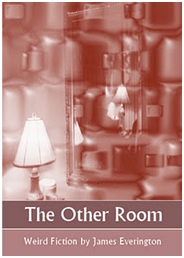
His first collection of short stories, The Other Room, is available from Amazon UK, Amazon US, and Smashwords.

Along with some other great horror authors, James is one of the Abominable Gentleman. You can also catch up with him at his blog Scattershot Writing. [Highly recommended, especially if you love short fiction — Tim]

He drinks Guinness, if anyone’s offering.

Click on the button to see all our guest posts

Posted in Guest Post | Tagged , , , , , | 3 Comments